Portable Workbench vs Sawhorses: Which Should You Buy?
Buy a portable workbench like the Pony if your jobs need clamping and a table that folds away, and buy sawhorses like the BORA pair if you'll build your own top. The BORA also carries the higher maker's rating, 2,700 lb for the pair.
On this page (14 sections)
- Breaking down plywood and long boards
- Clamping glue-ups, small builds and repairs
- Gluing, sanding and painting: which top can you ruin?
- Working away from the garage
- How fast does each one open?
- Which one gets you to a comfortable working height?
- Building a top across the BORA brackets
- What's in the box, and what will you still need to buy?
- Before you load either one
- How do the rated loads compare?
- Could one of these be your only bench?
- The numbers side by side
- Which one matches your shop?
- Portable workbench vs sawhorse: which should you buy
Buy the Pony portable workbench if your jobs need clamping and a table that folds away, and buy the BORA sawhorses if you'll build your own top for heavy sheets and lumber. We compared the Pony portable folding work table, which also works as a sawhorse, with the BORA Workhorse X folding metal sawhorse 2 pack.
The Pony comes with four bar clamps and four bench dogs. The BORA comes as a pair rated for 2,700 lb together, with no clamps and no top.
 Best for a clamping table that doubles as a sawhorse
Pony Portable Folding Work Table and Sawhorse
 Best for a high rated load across a pair of sawhorses
BORA Workhorse X Folding Metal Sawhorse, 2 Pack
Breaking down plywood and long boards
The BORA pair is the better fit for sheets and long boards, because it gives you two supports and the Pony is a single unit. A long board needs support at more than one point.
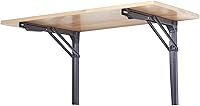
Two BORA sawhorses can carry a board between them, or a 2x4 and plywood top across their brackets. BORA's end brackets and top beam are meant for a sacrificial top, a board you can cut into without harming the surface underneath.
A Pony can hold one end of a long board, but you'd need a second support for the other end. For smaller pieces, the Pony's table does the job without a second stand.
Follow your saw's manual for how to support the work and the cut-off piece. Keep the cut line clear of the supports.
Clamping glue-ups, small builds and repairs
The Pony is the better fit for clamping, since four bar clamps and four bench dogs come in the box. The BORA includes no clamps, so you'll buy them separately.
The Pony set has two 12 in medium-duty and two 6 in light-duty E-Z HOLD bar clamps, two large and two small bench dogs, and two safety straps. Pony says its quick clamps and holding pegs let the table hold work as well as support it.
Clamp sizes usually describe how far the jaws open, so the 12 in pair takes wider or thicker stock and the 6 in pair suits small pieces. That mix covers small glue-ups and repairs without a trip to buy more.
A bench dog gives a board something to push against, which helps keep a piece in place while you plane or sand it. The clamps do the rest of the holding.
Use the clamp size the manual names for each job, and follow the maker's guidance on holding work. Keep clamps snug but not forced, and check that the piece sits flat before you cut or drill.
Gluing, sanding and painting: which top can you ruin?
The BORA's sacrificial top is the one you can ruin, while the Pony's table is part of the tool you want to keep clean. A sacrificial top takes glue, paint and saw cuts, and you swap the boards when they wear out.
On the Pony, lay down a drop cloth or a scrap board before you glue or paint, and wipe off drips before they dry. The clamps and bench dogs are small parts, so keep them clean too.
Working away from the garage
The Pony and the BORA both fold, so either one can go to a driveway, a lawn or a job site. The Pony folds flat, and the BORA's legs fold inside the sawhorse.
Pony points to garages, lawns and gardens for its six-height table, and it needs no assembly when you arrive. BORA says its single release latch opens the legs quickly, and the frame is steel.
Weight matters on the trip. The Pony weighs 14.5 kg, or about 32 lb, while BORA gives 25.8 lb for the 2 pack, so confirm whether that covers both sawhorses before you plan a carry.
Neither maker gives a folded size, so measure your car trunk or closet before you buy.
How fast does each one open?
Both open fast, but the Pony needs no assembly and the BORA needs one latch release. The Pony just unfolds, and its table sits at one of six heights up to 35 in.
Pony gives the lowest height as 25 in in one place and 30 in in another, so confirm that figure if you plan to sit while you work. Either way, the top reaches 35 in at its highest setting.
BORA's legs deploy with a single release latch and gravity assist, and BORA says that's 10 times faster than conventional sawhorses. That's the maker's claim, so judge it against the time you spend setting up now.
Set both on level ground before you load them. BORA doesn't give a height, so remember that a 2x4 and plywood top adds thickness to whatever height the sawhorses reach.
Which one gets you to a comfortable working height?
The Pony is easier to fit to your height, because it has six settings and the BORA doesn't describe any adjustment. A comfortable top sits close to your elbow when you stand, and our guide to what height a garage workbench should be shows how to find yours.
The Pony's settings top out at 35 in, which helps a taller user. If you're tall, check that 35 in reaches your elbow before you order.
With the BORA, the sawhorse height plus your 2x4 and plywood top sets the working height. Unfold one, measure it, add the thickness of the top you plan to use, and compare the total with your elbow.
If you have ongoing back, neck or shoulder pain, talk with a doctor before you settle on a working height.
Building a top across the BORA brackets
Lay 2x4 lumber across the pre-drilled end brackets and top beam, and you have a bench. BORA says the brackets let you connect two Workhorse X sawhorses into a sturdy workstation.
A short version of the build:
- Set the sawhorses on level ground, and decide how long the bench needs to be.
- Line up the 2x4 lumber with the pre-drilled holes in the brackets.
- Fasten it the way the manual describes.
- Check that the top is level before you load it, then add plywood if you want a wider surface.
BORA says the pre-drilled brackets also let you connect more than two sawhorses for a longer bench. Follow the manual for how many suit your top.
A sacrificial top gets cut, drilled and scarred, so the surface underneath stays clean. Our guide to the best workbench top material for a garage helps you choose what to put on it, and build or buy a garage workbench covers when a bought bench makes more sense.
What's in the box, and what will you still need to buy?
The Pony arrives as a working kit, while the BORA arrives as a frame that needs lumber, fasteners and clamps from you. Add up what each one still needs before you decide.
With the Pony, the box holds the table, four clamps, four bench dogs and two safety straps. Follow the manual for the straps, and plan to buy more clamps only if your projects outgrow the 12 in reach.
With the BORA, you supply 2x4 lumber for the top and plywood if you want a wide surface. You also supply clamps and the fasteners the manual calls for, and a hand or power saw to cut the lumber to length.
Before you load either one
Check four things before you put weight on a folding unit, because a stand is only as steady as the way you set it up.
- Stand it on level, solid ground, and move it if it rocks.
- Make sure the legs are fully open and locked, as the manual describes.
- Spread the load across the top and keep heavy pieces over the legs, not out at an edge.
- Add up the weight of the work, the tools and the top, and keep the total under the maker's rating.
Skipping the last check is the easy mistake with plywood, since a full sheet adds real weight. If the sheet is awkward, get a second person to help you lay it on the supports.
How do the rated loads compare?
The BORA is rated higher, at 1,350 lb per sawhorse and 2,700 lb for the pair, while the Pony is rated at 500 lb as a table and 1,000 lb as a sawhorse. Each figure is the maker's rating.
A rating assumes the weight is spread evenly rather than piled in one spot. Point loads, the floor and how you build the top all change what the frame can take, so treat any figure as a limit and not a promise for every job.
On paper, the Pony's 1,000 lb sawhorse rating sits below a single BORA sawhorse's 1,350 lb, and its 500 lb table rating is lower still. If your plywood, tools and material add up near the Pony's table rating, the BORA pair leaves more room.
Check which mode the Pony is in, since its rating doubles when it works as a sawhorse. Add up the plywood, the tools you'll set on it and the material you'll cut, compare that total with the rating, and read both manuals.
Could one of these be your only bench?
Probably not, because the Pony's footprint is 31 x 25 in and the BORA's top is whatever you build. Both work as helpers, but neither gives you drawers or a pegboard.
A fixed bench is a bigger surface, and the fixed benches in our best small workbenches for a garage roundup run from 39.4 to 48 in wide. A folding unit wins when you need the floor back between jobs, or when the work has to leave the garage.
If this will be your main bench, the BORA is the closer match, since a long 2x4 and plywood top gives you real room. The Pony works better as the second bench that clamps and travels.
The numbers side by side
The Pony has the clamps and the table, and the BORA has the higher load and the faster legs. The table lines up the three points that differ most.
| Product | Best for | Clamping | Work surface | Rated load | Our score |
|---|---|---|---|---|---|
| Pony Portable Folding Work Table and Sawhorse | a clamping table that doubles as a sawhorse | 4 bar clamps and 4 bench dogs | 31 x 25 in folding table | 500 lb table, 1,000 lb sawhorse (maker's rating) | 8.5 |
| BORA Workhorse X Folding Metal Sawhorse, 2 Pack | a high rated load across a pair of sawhorses | None included | 2x4 top across pre-drilled brackets | 1,350 lb each, 2,700 lb a pair (maker's rating) | 7.9 |
The figures are each maker's stated numbers. Our scores weigh specs, features and buyer feedback against what you're shopping for.
Which one matches your shop?
The Pony fits a home garage where you clamp, glue and assemble smaller projects, and the BORA fits a builder who already owns clamps and wants a strong, tall platform for sheets. Most buyers know from the job which need comes first.
The Pony saves buying extras, and its folding table gives you a second use as a sawhorse. The BORA's higher rating matters most when the top carries heavy tools or material.
If you're still unsure, decide in four steps:
- Write down the three jobs you do most.
- Mark the ones that need clamping or holding.
- Mark the ones that need a long or heavy top.
- Buy the one that covers two of the three.
Some shops end up with both, using the Pony as a clamping station and the BORA pair for sheet goods.
Portable workbench vs sawhorse for a small garage
In a small garage, the Pony covers two jobs with one folded unit, and the BORA pair folds its legs inside the frame so it stores neatly. Neither gives a folded size, so measure the closet or wall where it will live.
For more compact layouts, see our garage workbench ideas for small garages. If you want drawers on wheels instead of a folding unit, see our best mobile workbenches with drawers.
Portable workbench vs sawhorse: which should you buy
Buy the Pony if you want one folding unit that clamps, supports and works as a table. Buy the BORA if you want a higher rated load and you'll build the top yourself.
If you're weighing a folding table against a drawer unit, our mobile workbench vs tool chest comparison covers that choice. If you'd rather have a fixed bench, see our best small workbenches for a garage roundup.
For the wider set of bench types, the garage workbenches buying guide is the place to start.
Frequently asked questions
Is a portable workbench better than sawhorses?
It depends on the job, since a portable workbench with clamps and bench dogs holds work in place, while sawhorses only support a top you build. If you need clamping on the spot, the Pony covers that, and if you'll build a top for heavy loads, the BORA pair suits that.
How much weight can a pair of sawhorses hold?
BORA rates its Workhorse X at 1,350 lb per sawhorse and 2,700 lb for the pair, which is the maker's rating. The rating assumes the weight is spread evenly across the top, and point loads and the floor still matter.
Can you put plywood on sawhorses?
Yes, plywood is a common cover for a pair of sawhorses, and BORA's pre-drilled brackets are made for a 2x4 top. The Pony has its own table so it doesn't need a top, and you should follow each maker's manual for what a top may carry.
Do folding sawhorses need assembly?
The Pony needs none, since you unfold it and use it, and the BORA opens with a single release latch and gravity-assisted legs, which BORA says sets up 10 times faster than conventional sawhorses. Check that the legs are fully locked before you load the top.