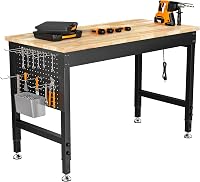
What Is the Ideal Garage Workbench Size?
The ideal garage workbench size for most home garages is 48 to 72 in long and about 24 in deep. Go down to 36 to 48 in if space is tight, or up to 72 to 96 in for a project garage.
On this page (17 sections)
- How long should a garage workbench be?
- 48 in or 60 in: which is the better everyday size?
- What depth should a garage workbench be?
- How do you measure space for a garage workbench?
- How do you find the ideal garage workbench size?
- What if your wall is shorter than the bench you want?
- What height should a garage workbench be?
- How much wall do you need above the bench for a pegboard?
- How much walkway and room do you need?
- How heavy is a bench of each size?
- Does a rolling bench change the size you need?
- Does a bigger bench carry more weight?
- Can you test a size before you buy?
- What size mistakes do people make with a garage workbench?
- What should you keep on a garage workbench of each size?
- What size fits a shared garage or workshop?
- Which garage workbench size should you pick?
Most home garages do well with a bench 48 to 72 in long and about 24 in deep. A longer bench helps with big projects, but a bench that blocks a walkway or a car door costs more than it adds.
This guide covers length and depth, a simple way to measure your space and five benches from 39 in to 96 in, so you can see each size in practice.
It's for a homeowner setting up a garage for the first time, or replacing a bench that turned out too small.
For the wider decision, start with our garage workbenches buying guide.
How long should a garage workbench be?
Most home garages do well with 48 to 72 in, and a 36 to 39 in bench suits a small corner. The table shows the common lengths, the top area each one gives you and who each one fits.
| Length and depth | Top area | Who it fits | Example in this guide |
|---|---|---|---|
| 39.4 x 21.7 in | About 6 sq ft | A small corner, hobby work or a tight garage | IGERI 39.4 in |
| 48 x 24 in | 8 sq ft | Most home garages with a walkway and some storage | CAMMOO 48 in |
| 60 x 22 in | About 9 sq ft | Longer projects and more tools on the top | CAMMOO 60 in |
| 72 x 25 in | 12.5 sq ft | Project garages and shared workshops | VEVOR 72 in |
| 96 x 24 in | 16 sq ft | Large projects and multi-tool setups | WORKPRO 96 in |
Each step up in length buys work room, but it also takes more wall and more walkway. Think about the tools you'll keep on the bench before you pick a length.
The IGERI is the smallest bench in this guide. It has a steel drawer, a pegboard and a lower mesh shelf, and it weighs 37 lb.
A 48 in bench is the middle choice for many home garages. The CAMMOO 48 adds a shelf, a pegboard and a power strip, so it gives you storage without much more floor.
48 in or 60 in: which is the better everyday size?
A 48 in bench is easier to fit against a short wall, while a 60 in bench gives you more top when the wall allows it. The two differ in depth and weight too, so compare more than length.
The CAMMOO 48 is 48 in long and 24 in deep, with a shelf, a pegboard and a power strip. The CAMMOO 60 is 60 in long and 22 in deep, with a solid rubberwood shelf and pegboards on the top and both sides.
The extra 12 in of wall buys only about 1 square foot of top, because the 60 is 2 in shallower. It also weighs 89.2 lb against 76.7 lb for the 48.
Pick the one that fits the wall first, then check the storage you need.
What depth should a garage workbench be?
About 24 in deep is the common target, since it keeps the top within reach from the wall without eating into the walkway. Most benches in this guide sit between 22 and 25 in deep.
The IGERI is 21.7 in deep, the CAMMOO 60 is 22 in, the CAMMOO 48 and WORKPRO are 24 in, and the VEVOR is 25 in.
Check the exact depth before you order, since a few inches can change how much room you keep for the walkway.
For a deeper look, see how deep a garage workbench should be.
Deeper benches hold bigger tools, but the back of the top gets harder to reach from the front. Keep the tools you use most near the front edge.
How do you measure space for a garage workbench?
Measuring first keeps you from buying a bench that blocks a door or sits in the wrong spot. Use these steps with a tape measure and a roll of painter's tape.
- Measure the wall length where the bench will sit, from corner to corner or to the nearest obstacle.
- Mark the walkway you need, and keep it clear when the bench is in place.
- Open the car doors and the garage door, then check that the bench won't block them.
- Note where the outlets, switches and shelves are, so the bench doesn't cover them.
- Tape the footprint on the floor and walk around it before you order.
For example, say a wall is 120 in long and a side door swings across the last 24 in. That leaves 96 in, and a 96 in bench would fill it end to end.
A 72 in bench leaves 24 in of breathing room, which is usually the better call. That's an example, not a measurement, so use your own numbers.
Measure the full depth, not just the top edge, since a bench that fits on paper can still crowd a door when you open a drawer or stand at the front.
Check the height of the space too. Look for the lowest light, shelf, garage door track or opener rail above the spot, especially if the bench has a pegboard or shelf on top.
Where should the power cord reach?
A bench with a built-in power strip needs to sit within reach of a wall outlet. WORKPRO's cord is 5 ft, CAMMOO's is 6.5 ft and VEVOR's is about 118 in.
Follow the maker's manual for the power strip, and ask a licensed electrician about the circuit before you run heavy tools from it.
How do you find the ideal garage workbench size?
Start with the length your wall allows, then pick the largest bench that still leaves a clear walkway. A bench that fills the wall from end to end can feel cramped, so leave some space at each end.
Measure your space first, then use the three sizes below to narrow your choice. Each suits a different kind of garage, and the bench you choose should match the work you do most.
Ideal garage workbench size for a small garage
A 39 in or 48 in bench usually fits a small garage best, as long as the walkway stays clear. Smaller benches also leave more room for a folding ladder, a bike or a cart.
For more small-footprint options, see best small workbenches for a garage and garage workbench ideas for small garages.
Ideal garage workbench size for longer projects
A 60 in bench gives you more top for longer work, such as a project that needs several tools laid out at once. It also gives you room for a longer shelf below the top.
The CAMMOO 60 needs more wall than the 48 in bench, so measure before you order.
Ideal garage workbench size for a project garage
A 72 in or 96 in bench suits a project garage with room on every side. Long tops help with bulky material, heavy machinery and 3D printer setups, but they need a long wall and a clear path to walk around.
What if your wall is shorter than the bench you want?
Choose the next size down, or split your tools between two smaller benches on different walls. A shorter bench you can walk around is usually more useful than a longer one that blocks the door.
A corner setup is another option when the wall meets an open corner. Measure both walls first, and keep the corner clear so the door and the walkway still work.
A pegboard above a short bench puts tools within reach without taking floor space. That helps when the bench is the shortest size you can fit.
What height should a garage workbench be?
Pick a height you can work at standing, with your elbows near the top and your shoulders relaxed. Most benches in this guide adjust, so check the range before you buy.
The WORKPRO adjusts from 28.75 in to 38.5 in, the VEVOR from 28 in to 39.5 in, and the CAMMOO 60 from 28.8 in to 39 in.
The IGERI has a 35 in working height and leveling feet but no stated height range, so it suits you only if that height fits.
If you plan to sit at the bench, check the knee room under the top too, because a lower shelf takes legroom. WORKPRO says its 28.75 in to 38.5 in range suits standing or seated work.
If you have ongoing back, neck or shoulder pain, talk with a doctor before you change how you work. For more on height, read what height a garage workbench should be.
How much wall do you need above the bench for a pegboard?
Plan for the pegboard height as well as the bench length, since tools hung above the top use wall you can't use for anything else.
The IGERI stands 46.8 in tall with its built-in pegboard, and the CAMMOO and WORKPRO benches add boards of their own.
If you plan to hang a separate board on the wall, leave room for it above the bench. Read how to organize a pegboard above your workbench before you lay out the wall.
How much walkway and room do you need?
Leave enough walkway to pass the bench without turning sideways, and enough room in front to stand at it and open any drawer.
A walkway that's clear on the day you measure can fill up with boxes, bins and bikes, so plan for the space you'll keep.
Plan one clear path from the door to the bench, so you can carry long boards in without turning them on end.
Drawers and shelves need their own room. A deep drawer that opens into a walkway can turn a tight spot into a trip hazard, so check the swing before you commit to a size.
How heavy is a bench of each size?
Longer benches weigh more and are harder to carry through a door. The IGERI weighs 37 lb, the CAMMOO 48 weighs 76.7 lb and the CAMMOO 60 weighs 89.2 lb.
For the 72 in and 96 in benches, check the shipping weight before you order. Measure the door and the path the box will take, since a long box has to clear every turn on the way to the spot.
Does a rolling bench change the size you need?
A rolling bench can fit a tighter spot, because you can move it out of the way when you need the floor. VEVOR includes both universal wheels and rubber feet, so the same 72 in bench can roll or stay put.
Rolling doesn't change the length you need at the work position. Measure the bench at the spot where it'll sit most of the time, not the spot you roll it to.
A rolling bench still needs its full footprint when you work at it, so don't count the roll as extra floor. Lock the wheels before you use it, and roll it back to the wall when the job is done.
Does a bigger bench carry more weight?
Not by rule. The 39.4 in IGERI and the 60 in CAMMOO both carry a 2,000 lb rating from their makers, while VEVOR rates its 72 in bench at 3,000 lb and WORKPRO rates its 96 in bench at 4,000 lb.
Size and rating are separate choices. Read how much weight a workbench can hold for what those figures cover, and pick the length from your wall first.
Can you test a size before you buy?
Yes. Tape the footprint on the floor, then stack a few boxes inside it at working height.
Work through one real task, such as laying out a repair, and notice where you stand, where you reach and where the door swings. If you keep bumping an edge, go one size down.
What size mistakes do people make with a garage workbench?
The most common mistake is buying the longest bench the wall allows without checking the walkway. A bench that fits the wall can still block a door or make the walkway too narrow to use.
- Buying the longest bench the wall allows, then blocking a door.
- Measuring the top but not the full footprint, including drawers that open out.
- Forgetting the outlets and light switches on the wall.
- Skipping the height check, so the bench sits too high or too low for the work.
- Measuring the room but not the doorway and turns the box has to pass.
Check each one before you order, since fixing a size mistake after delivery usually means moving a heavy bench twice.
What should you keep on a garage workbench of each size?
Keep your daily tools on the top, and reserve the bench for work that needs the most room. Smaller benches suit hand tools and small repairs, while longer benches suit bigger projects and more tools at once.
A 39 in or 48 in bench works well as a home base for hand tools, a vise and one small project at a time.
Longer benches let you spread out a second project, which helps when glue, clamps and parts all need a flat surface at once.
For a vise, follow the maker's manual for both the bench and the vise before you mount it. Our guide to where to mount a vise on a garage workbench covers the general layout questions.
Store the rest of your tools on a shelf, in a drawer or on a pegboard above the bench.
What size fits a shared garage or workshop?
A shared space usually needs a bench that leaves room for two people and a clear route to the door. Long benches give more work surface for two people at once, but they need more wall and more clear floor.
The 72 in VEVOR and 96 in WORKPRO offer long work surfaces for that kind of setup, while the 48 in and 60 in benches fit a tighter shared space.
Measure the full route through the room, since a bench that fits on one wall can still block a shared path.
Which garage workbench size should you pick?
Pick the size by the space you have, then by the work you do.
- Pick a 39 in bench if you have a corner and small projects.
- Pick a 48 in bench for most home garages with a walkway and some storage.
- Pick a 60 in bench if you need more top for longer projects and have the wall for it.
- Pick a 72 or 96 in bench for a project garage with room on every side.
Measure first, then pick the longest bench that still leaves a clear walkway. If you need a heavier build, read how to choose a heavy duty garage workbench.
Frequently asked questions
How long should a garage workbench be?
Most home garages do well with 48 to 72 in, and a 36 to 39 in bench suits a small corner. Measure the wall where the bench will sit, then leave a walkway you can pass without turning sideways, and match the length to your work, since the longest bench isn't always the right one.
How deep should a garage workbench be?
About 24 in is the common target, and the benches in this guide run from 21.7 to 25 in deep, which keeps the top within reach from the wall. Go shallower if the walkway is narrow, and check the exact depth before you order, since a few inches change how much room you keep.
What size workbench fits a one-car garage?
A 48 in bench is a common fit for a one-car garage, as long as the car doors and a walkway stay clear. Measure the clear space with the doors open, tape the footprint on the floor, then choose the longest bench that still leaves room to move around it.
Is a 96 inch workbench too big for a home garage?
It can be, because a 96 in bench takes a long run of wall and 16 square feet of top alone. It suits a project garage with space on every side, and a shorter bench with storage may fit a tighter space better.